Teaching Voice and Tone Through ChatGPT
Submitter: Yeqing Kong, Georgia Inst. of Tech.
——————————————————
The experiment:
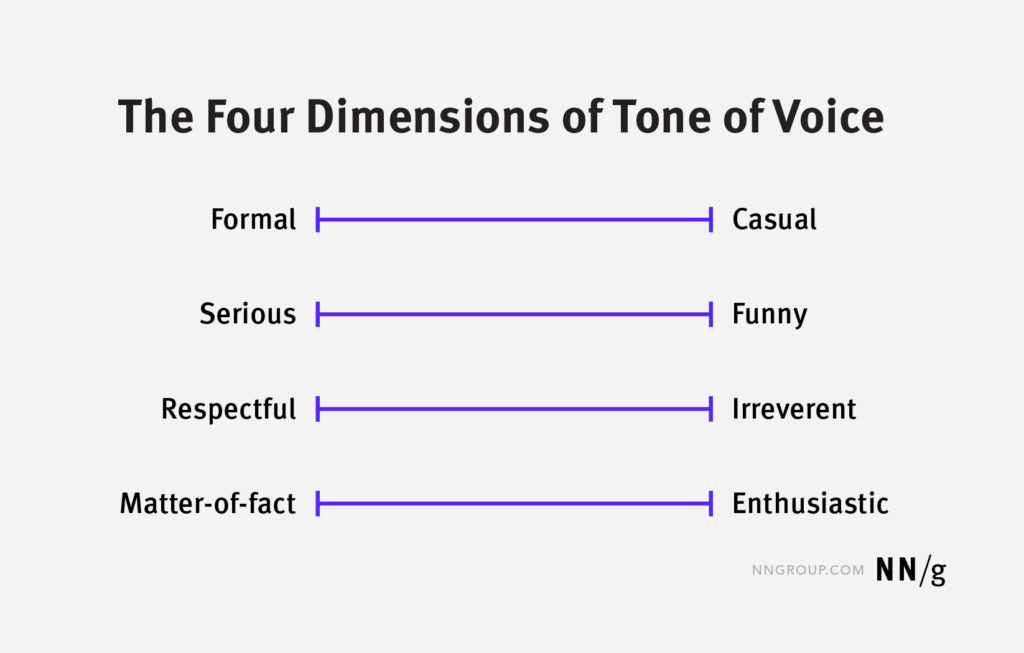
Voice and tone are two important concepts in technical communication, shaping a brand’s personality and influencing users’ content experience. This teaching experiment immerses students in the exploration of how rhetorical choices can modify the tone of digital products. I drew on Moran’s (2023) framework, the four primary dimensions of tone-of-voice—humor, formality, respectfulness, and enthusiasm. I selected four websites to represent diverse combinations of tone-of-voice in commercial and non-profit contexts, including Starbucks, GEICO, MINI Cooper, and the Centers for Disease Control and Prevention (CDC). Students engage in the following multi-step process:
• Step 1: Evaluate each website’s tone along the spectrum of four dimensions—formal vs. casual, serious vs. funny, respectful vs. irreverent, matter-of-fact vs. enthusiastic.
• Step 2: Craft prompts for ChatGPT to rewrite five messages on the websites by tweaking one of the four dimensions. Example prompts could include “Let’s infuse a bit more informality into this message” or “Let’s add some humor into the message.” Refer to Follonier (2023) for additional examples. Record both the prompts and the original as well as the revised versions for each message.
• Step 3: Analyze and summarize the changes in each revision, reflecting on how these alterations contribute to a different tone.
Results:
The assessment of this activity has two aspects: revision and reflection. The revision component evaluates students’ interaction with ChatGPT, focusing on the crafted prompts guiding the desired output. The reflection component assesses whether students can notice the subtle changes in the revised version and contemplate how these modifications influence the tone.
This activity proves productive in several ways. First, students were fascinated by AI’s ability to generate content with varying tones by adjusting the words, phrasing, sentence structures, or punctuation. The incorporation of AI aids in conveying how a single message can carry different tones and impact readers’ perceptions. Second, the activity helps students realize the importance of specifying tone when using ChatGPT for different purposes. The creation of prompts to constrain the tone of output text is a process of “prompt engineering,” which can minimize the likelihood of generating undesired content and help in achieving communication goals (Open AI API, n.d.).
For instance, below is ChatGPT’s revision of an error message on GEICO’s website:
• Original message: “This is awkward, but we can’t find that page!” (Tone: casual, funny, enthusiastic)
• Revised message: “We regret to inform you that the requested page is currently inaccessible, and we extend our apologies for any inconvenience caused.” (Tone: formal, serious, respectful)
Relevant resources:
- Follonier, F. (2023, March 19). ChatGPT style guide: Understanding voice and tone prompt options for engaging conversations. https://www.relataly.com/chatgpt-style-guide-understanding-voice-and-tone-options-for-engaging-conversations/13065/
- Moran, K. (2023, August 16). The four dimensions of tone of voice. NN/g Nielsen Norman Group. https://www.nngroup.com/articles/tone-of-voice-dimensions/#four
- Open AI API. (n.d). https://platform.openai.com/docs/guides/safety-best-practices
Contact:
- Email: yeqingkong[AT]gatech[DOT]edu
- Twitter: @YeqingKong
Leave a Reply